
Natalie Rae Good Holt/ Smithson Foundation and Dia Art Foundation
I rarely take meaningful notice of the winter solstice, but this year I found myself thinking about it—the idea that a turning point can be so subtle you don’t recognize it until later. The return of light is almost invisible at first: seconds gained, barely perceptible. Though there’s no detectable difference today from yesterday, the direction has shifted. There’s relief in that. Turning points in life can look like this.
In session, I sometimes ask a version of this question: What would you say was the turning point for you? And if we think of a turning point as a shift from one direction to another, can you name those directions? What did it take from you to make that turn?
I appreciate this question because it invites active meaning-making. It asks us not only to identify a moment, but to notice the qualities, skills, and strengths that made that turn possible. It reminds us that our identities are shaped not only by what happens to us, but by how we respond—by the stories we tell ourselves.
In the narrative therapy tradition, this turning-point question comes from Jill Freedman, whose teachings have shaped how I listen for plotlines, counter-plots, values, and identity in people’s stories.
As I look back on this year, I feel reflective in a familiar way—appreciative, tired, and also like I’ve reached some kind of checkpoint where I have a moment to splash some water on my face before getting back in the race. The year wasn’t a breeze; there were hard moments. And even so, I sense a turning, though I’m still in the early stages of understanding it.
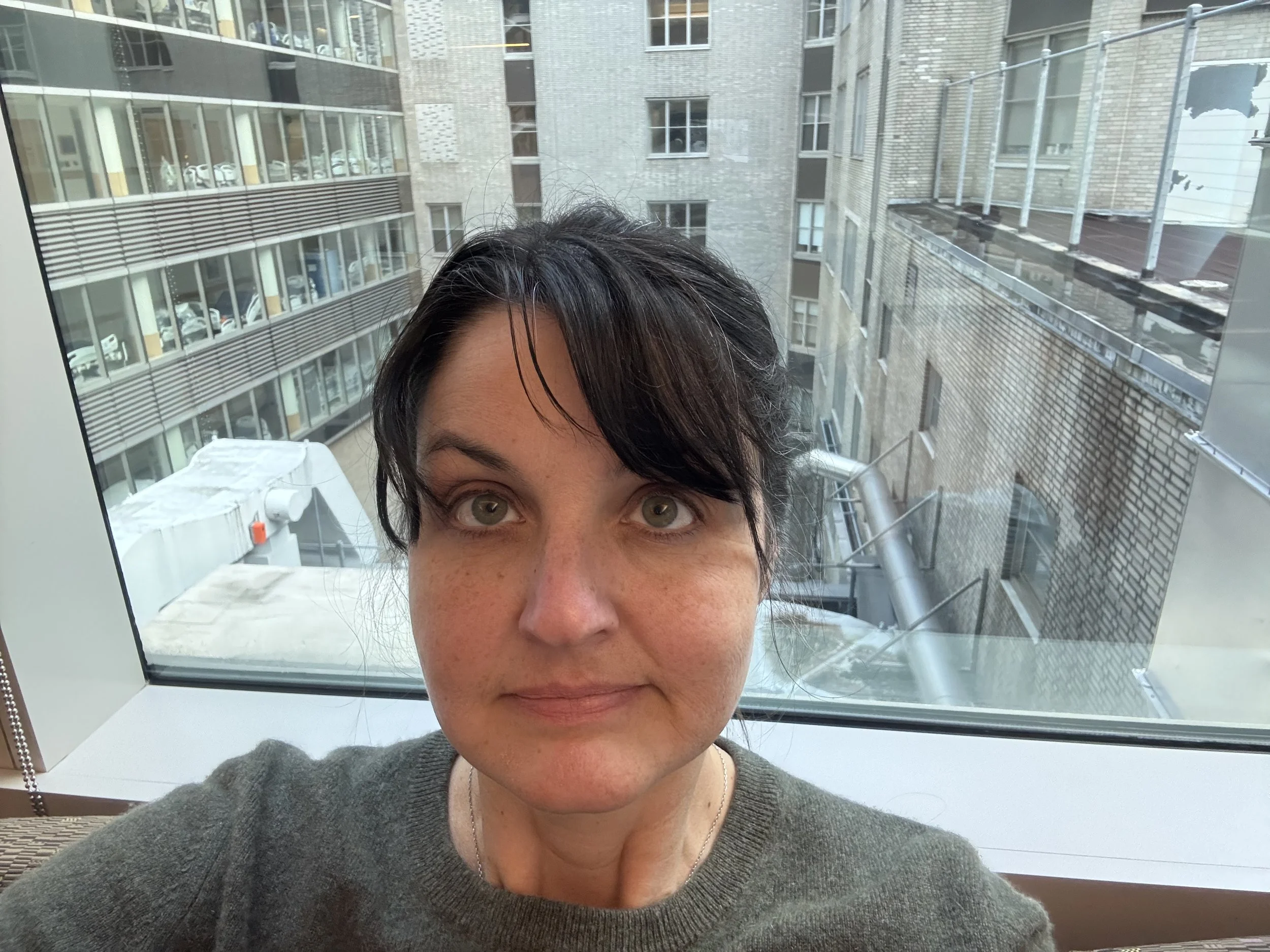
Boston, Thanksgiving week
One of those moments occured to me in a Boston hotel room during Thanksgiving week, while my husband underwent mitral valve repair surgery at Mass General. It was one of those times in life where everything was distilled. The weightiness of life I usually experience was upstaged by a sense of being supported—by friends checking in, by family stepping forward, by my team at Heart Stone, who’ve grown so much in their ability to keep things moving without me, and by a medical team whose extreme competence was deeply reassuring.
That recognition marked a subtle turning point for me. Returning to the question I often ask in session, if we imagine a turning point as a shift away from one thing and toward another, for me it looked like this: from doubt toward trust; from independence and self-reliance toward vulnerability and receptiveness; from tension toward something closer to flow.
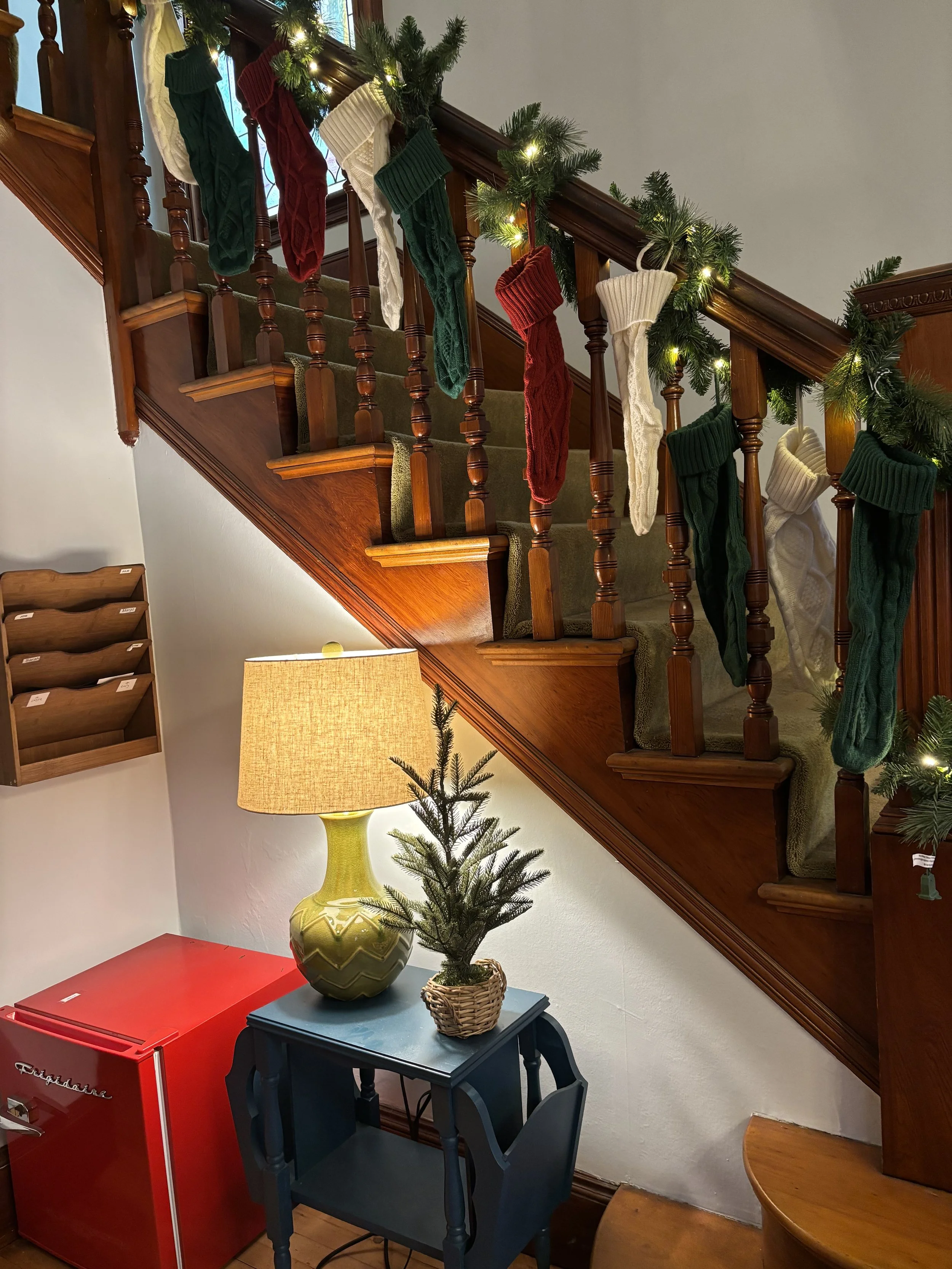
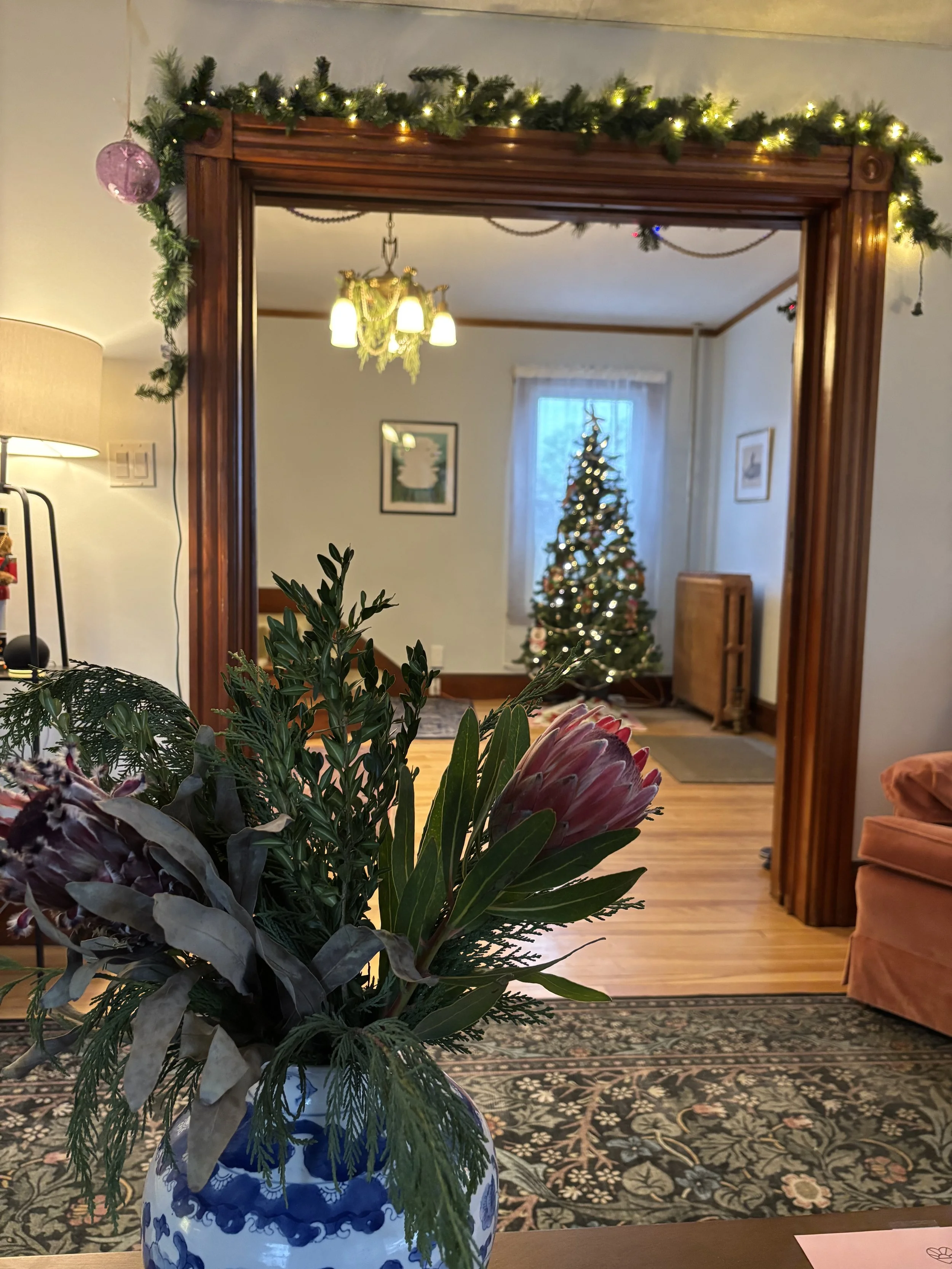
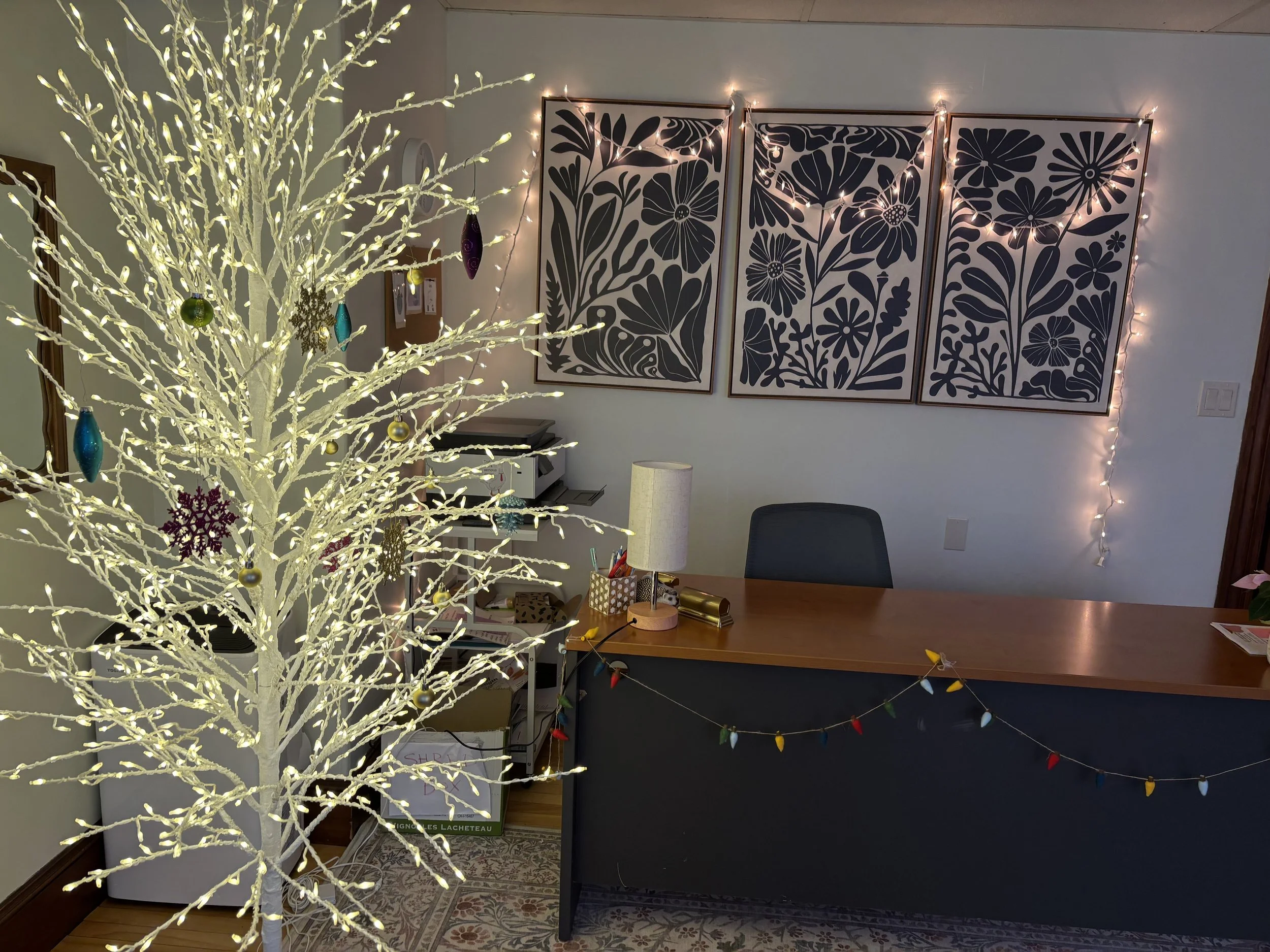
There were smaller turns, too. Decorating Heart Stone for the holidays this year brought a surprising sense of happiness. What required so much effort last year—planning, shopping, designing—felt simple this time. We had traditions. Systems. Prior planning that made life easier. A reminder that preparation can be a form of care, and that some turning points are made not of dramatic moments, but of accumulated, ordinary choices.
When I reflect on these moments together, I notice what made the turn possible: a growing willingness to trust others, the practice of asking for help even when it doesn’t come naturally, and a kind of steady fortitude that carried me through uncertainty.
This year, a phrase has been returning to me again and again: trust in the unfolding of life—and in the unfolding of a life. It feels less like a declaration and more like a practice. A reminder that meaning often arrives slowly, and that we don’t always recognize a turning point while we’re standing inside it.
As the year comes to a close, I want to offer you this same invitation:
Where do you sense a turning in your own life?
If you were to name the direction you were heading, and the direction you’re turning toward, what words would you use?
What strengths, characteristics, or values have helped you make that shift?
Sometimes turning points announce themselves. Other times, they arrive like the solstice, imperceptible. Either way, they shape us. They become integrated into the bigger plotline of our lives, and ultimately what we are about.
May this season offer you patience, perspective, and the beginnings of a turn toward whatever you most need.
♥ Emily
Inspired by “My Favorite Questions,” Jill Freedman, The International Journal of Narrative Therapy and Community Work (2011).