EMDR
Eye Movement Desensitization and Reprocessing — EMDR — is a structured, evidence-based therapy designed to help people process and integrate experiences that have been too overwhelming for the brain to fully digest.
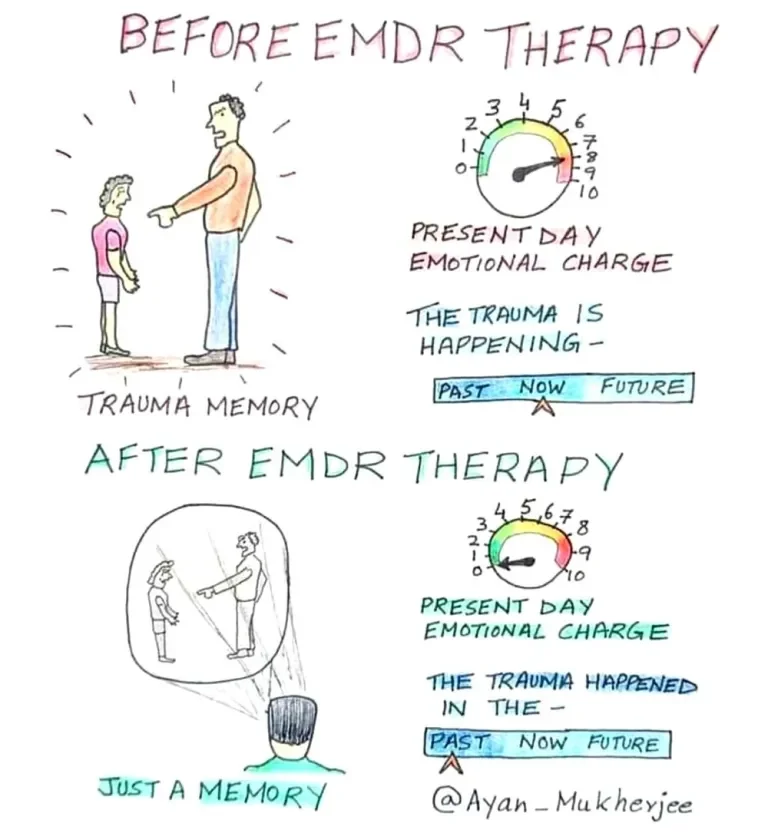
When something traumatic or deeply distressing happens, the brain sometimes stores it differently than ordinary memories — fragmented, charged, and easily triggered. EMDR works by activating the brain's natural processing system through bilateral stimulation, typically guided eye movements, while holding the difficult memory in awareness. Over time, the memory loses its charge. It becomes something that happened, rather than something that is still happening.
EMDR doesn't require you to talk through every detail of what you've been through. The processing happens at a deeper level than narrative alone.
"EMDR therapy shows that the mind can in fact heal from psychological trauma much as the body recovers from physical trauma."
— Francine Shapiro, Ph.D., founder of EMDR
EMDR may be a good fit if you:
Are carrying the weight of a specific traumatic experience or series of events
Find that certain memories, images, or feelings keep returning uninvited
Notice strong physical or emotional reactions to things that remind you of the past
Have tried talk therapy and feel like something is still unresolved at a deeper level
Are ready to process rather than just manage what you've been through

You've been through something. And part of you is still there.
What to expect
EMDR follows a structured eight-phase protocol that begins with history taking, preparation, and building internal resources before moving into processing. Your therapist will never move faster than feels safe. The early phases of EMDR are often as important as the processing itself — building the foundation that makes deep work possible.
Sessions typically run longer than a standard therapy hour, and the number of sessions varies depending on what you're working on.
EMDR and Brainspotting
Both EMDR and Brainspotting are body-brain approaches to trauma processing that work below the level of conscious thought. If you're curious about which might be a better fit for you, our clinicians are happy to talk it through during a free consultation.