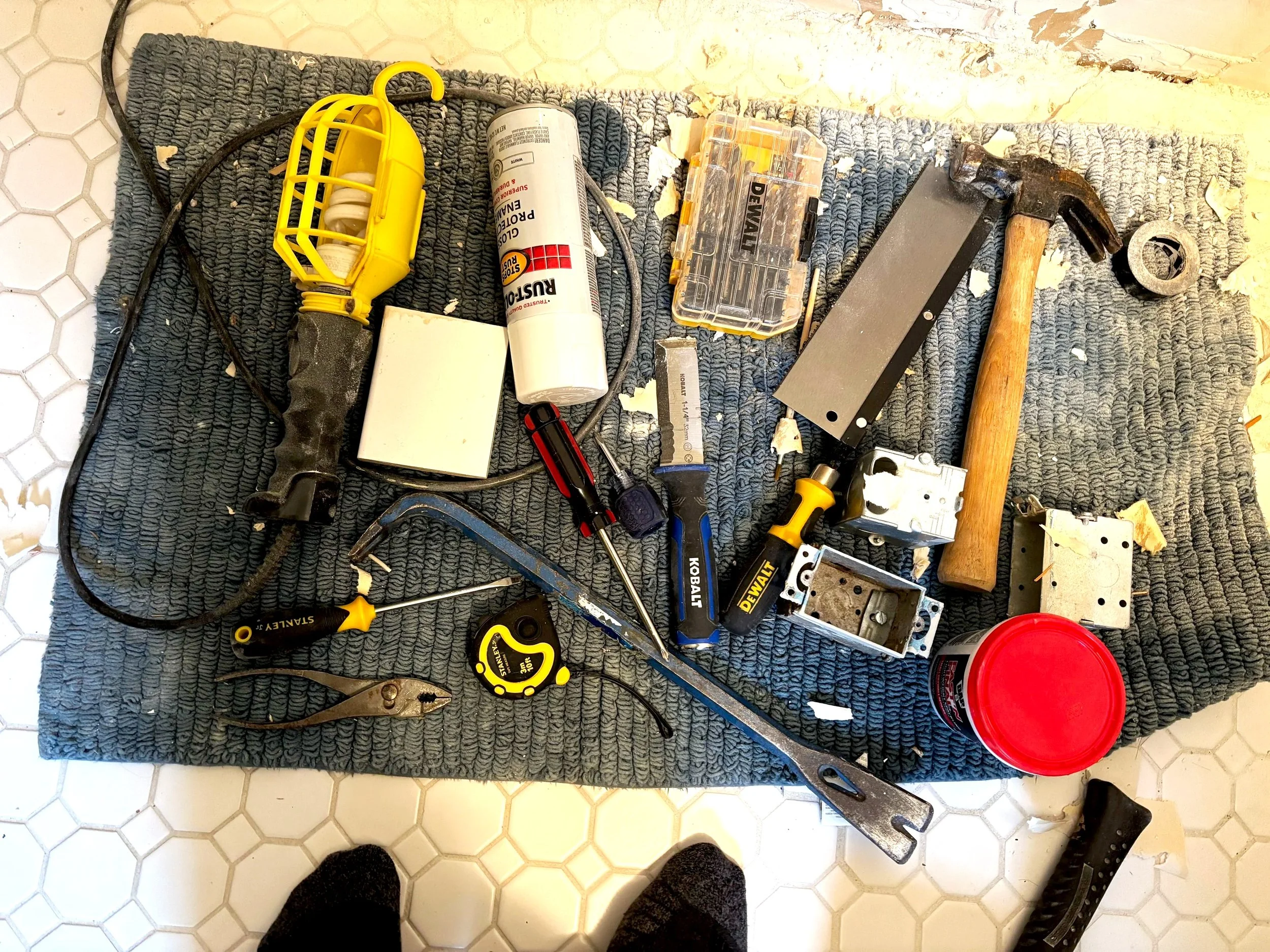
The Crowbar was My Idea
There's a particular kind of satisfaction that comes from taking a crowbar to something. If you haven’t experienced this, I wish it for you. It’s a liberation, a burst into the possibility of things. And when it's your own wall, in your own bathroom, on a rainy Saturday morning when you probably should be doing something else… well. Even better.
Something to know about me: I have a somewhat impulsive relationship with home renovation. The impulse arrives—strong, clear, fully formed—and before long I'm pulling back carpet, prying up tack strips, or ripping kitchen cabinets off the wall in pursuit of floating shelves, operating on a vision that is often well ahead of my skill set. My husband Christopher has, over the years, developed a kind of calm acceptance of this. When he came downstairs recently and found me crowbarring the ceiling-to-floor beadboard off the bathroom walls, he didn't say a word. He just looked at me, then at the walls, and went to make his tea.
It started, as these things often do, with a toilet.
For the better part of nine months, our family of four has been operating with one fully functional toilet. The other—let's call it the guest toilet—was strictly pee only. No paper, no anything. House rules. You adapt. You stop thinking about it. You maneuver around the problem so automatically that one day you realize you've stopped noticing it's a problem at all.
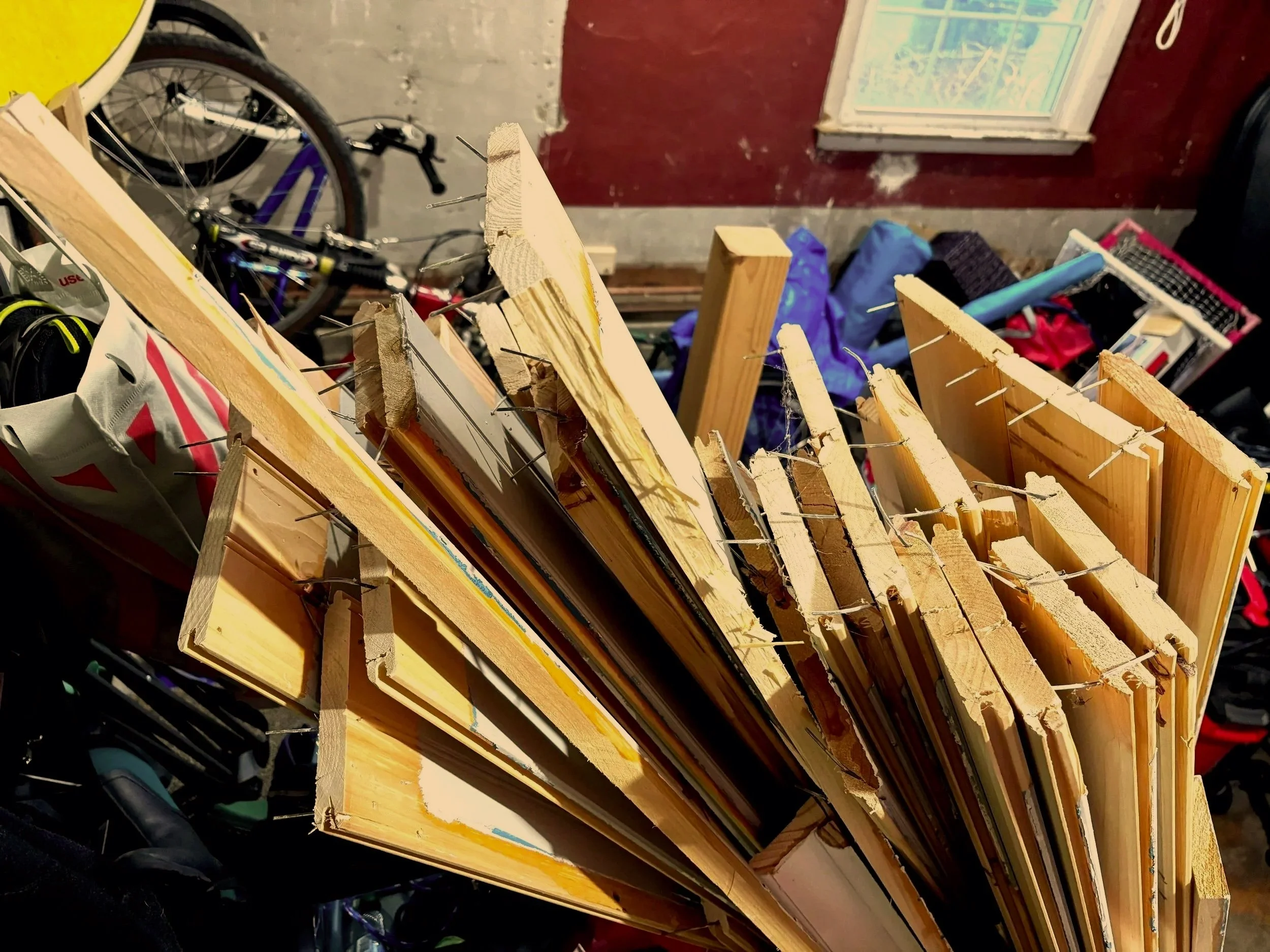
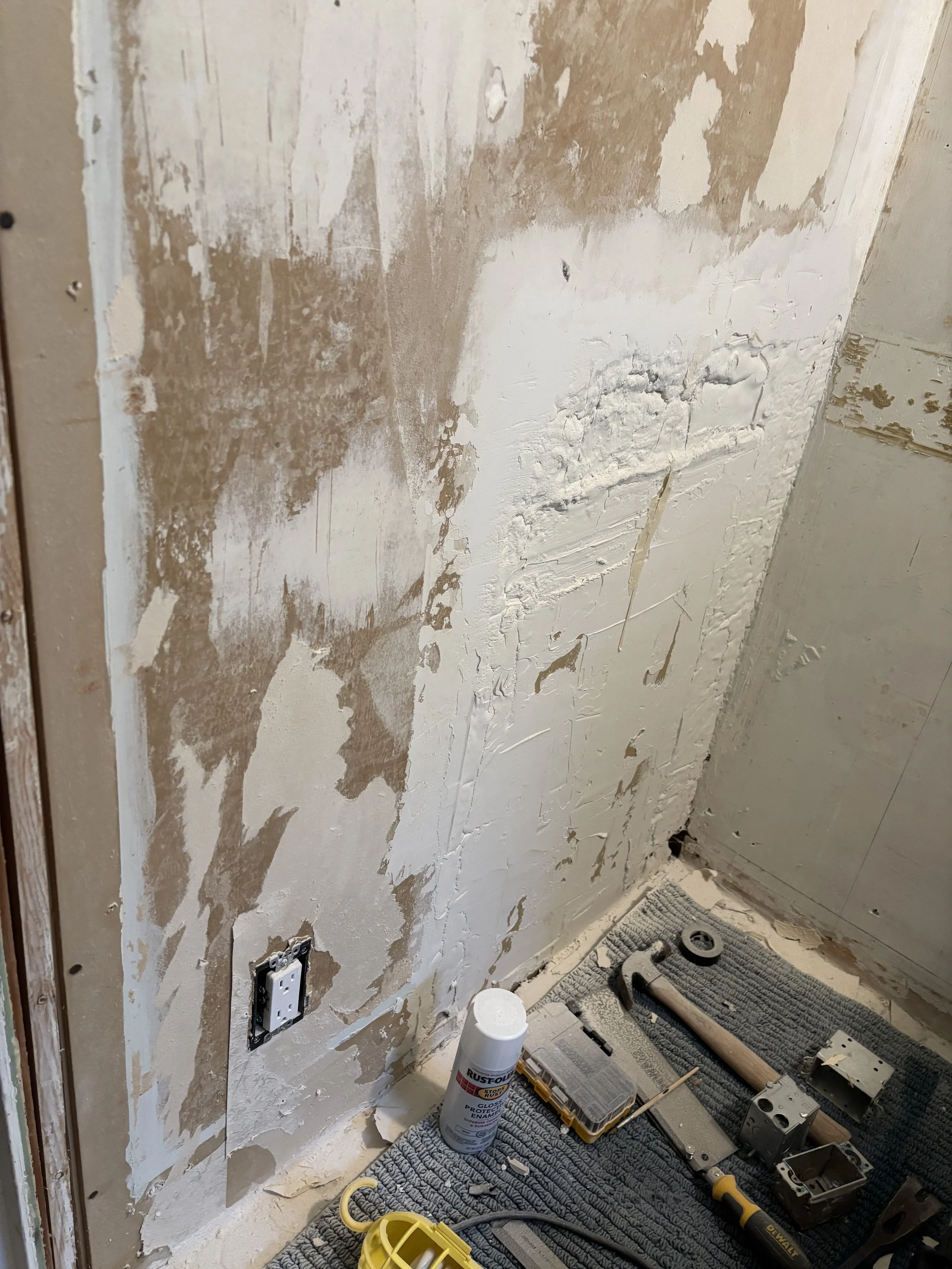
Until one day you're at Costco and there's a toilet—a good one, the kind with a washlet—at a steep discount, and something in you says: that's the one. It needed a new electrical outlet. The outlet required removing some beadboard. And once I was standing there with a crowbar in my hand, looking at a perfectly removable wall—well. Why stop there? The long nails gave way from the drywall and something in me let go right along with them.
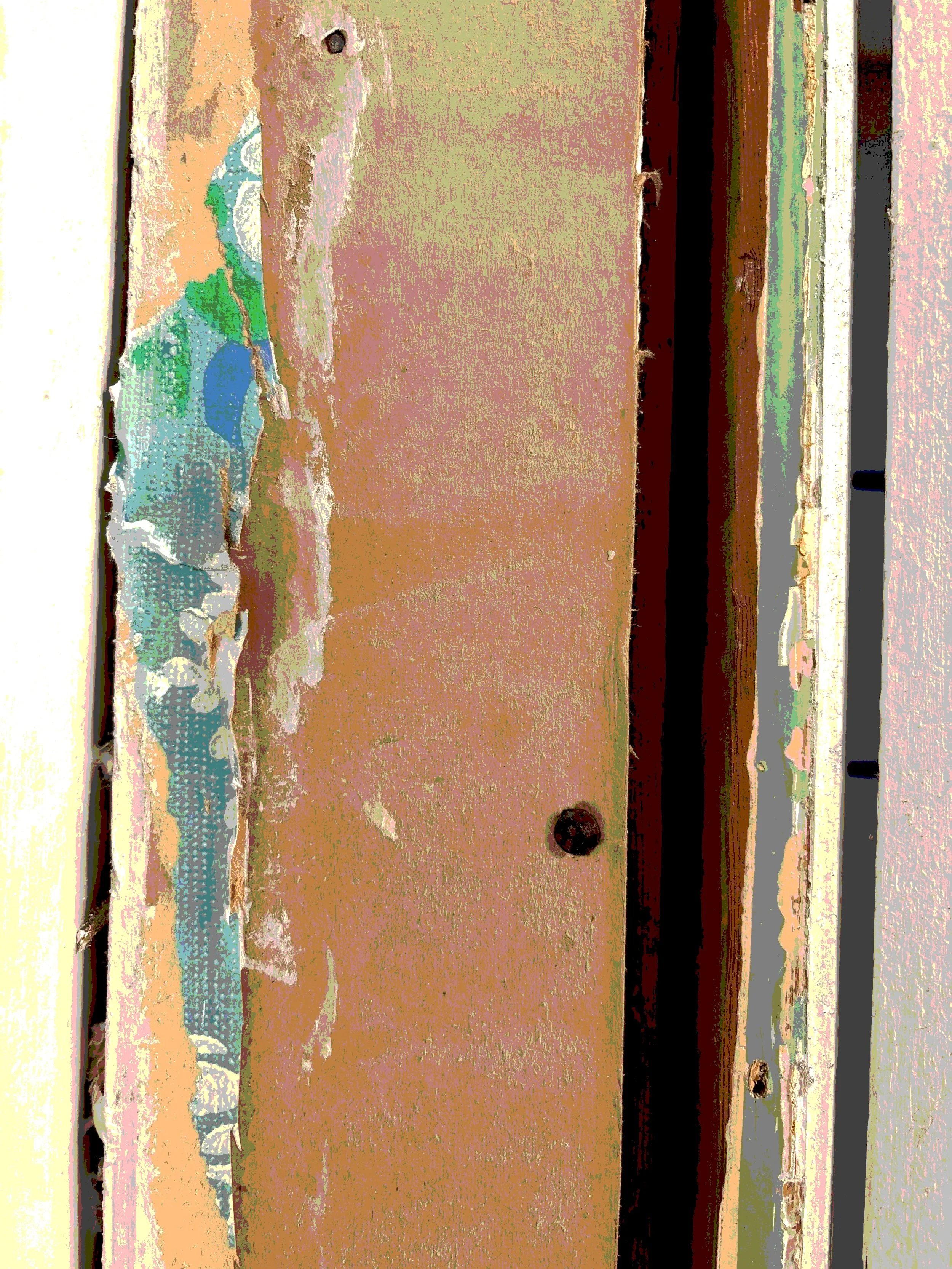
But underneath the beadboard was wallpaper. Old wallpaper, layers of it — what looked like funky 1960s print buried beneath something more restrained from a few decades later. And underneath that, in places, patches—uneven, lumpy, clearly the work of someone doing their best with what they had and not quite enough of either. Whoever patched those walls wasn't trying to deceive anyone. They were trying to get the wall functional again. To make it livable. They did what you do: covered the wound as well as they could and moved on.
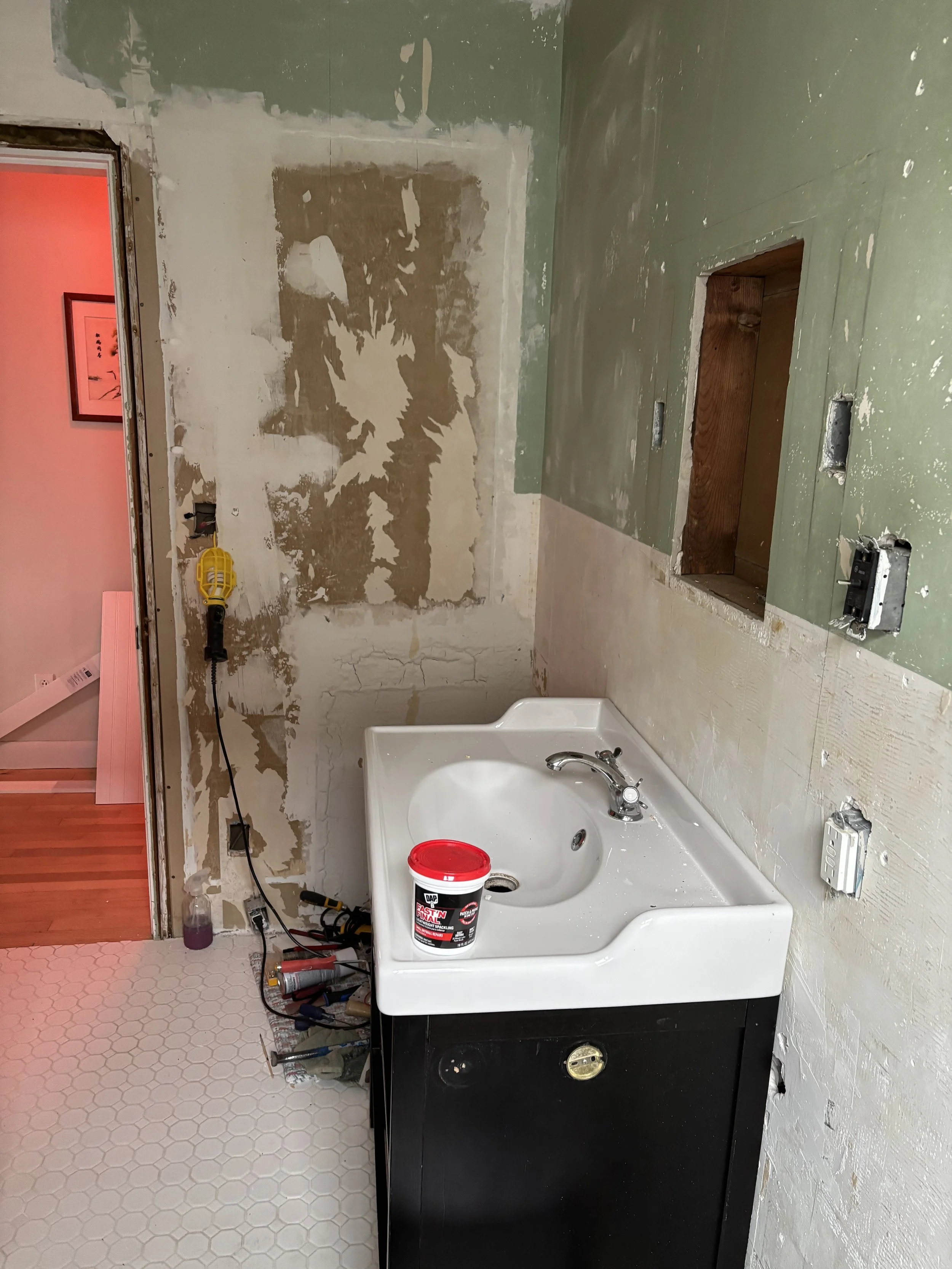
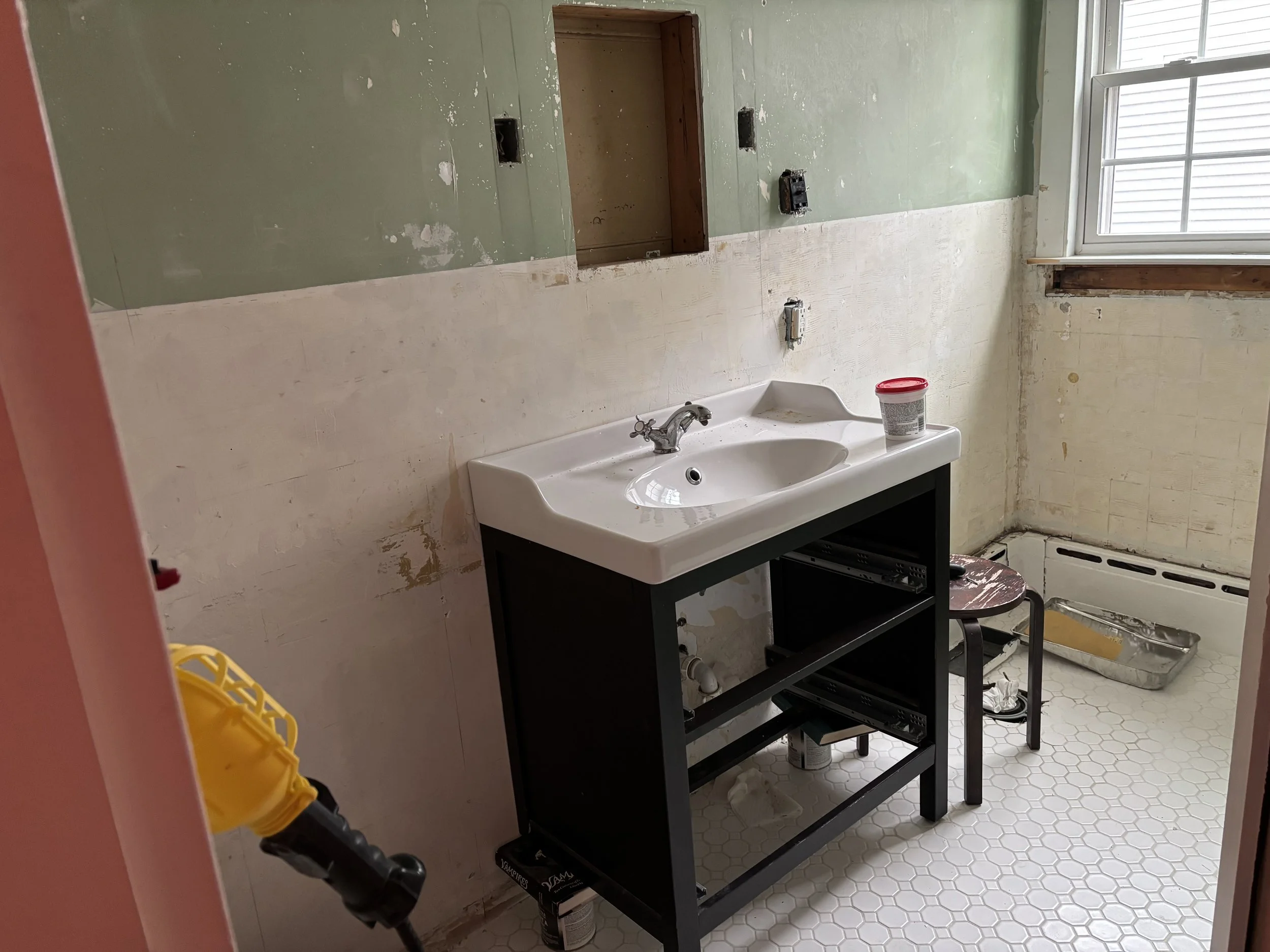
Then I pulled out the sink. A shutoff valve broke. The pipes were full of years of buildup—the kind of thing that works fine until the moment you go looking. Another layer. Another thing to tend to.
I recognized something in all of it.
At Heart Stone, I've been co-facilitating a group called Inner Circle—a space for women who have already done significant therapeutic work. They were, by most measures, doing okay. They'd already been through the harder early excavations. And yet they chose to come back, to pick up the metaphorical crowbar again, and go a little deeper.
What emerged in that room, again and again, was not dramatically new material. It was the older stuff. The places, the grief, that had been covered over with whatever was available at the time: people-pleasing, substance use, hypervigilance, humor, anger, dissociation, bingeing. None of it was wrong. All of it made sense. Every layer was a reasonable response to something real. Often loss. And the room held it all—sometimes with tears, sometimes with long silence, sometimes with the quiet recognition of oh, there you are. And sometimes, when you pulled one thing, something else needed attention too. Not a setback. That's just how it goes when you start looking honestly.
What also emerged was judgment—that quiet, persistent voice: Shouldn't I be past this? I've been at this for years. How is this pain still so painful?
And sometimes, something more raw than judgment: fear. One woman, someone whose courage I deeply admire, named it plainly. She was afraid of what healing might require her to face.
None of this is evidence of doing it wrong. It's evidence of adaptation. Of a self that kept showing up, kept finding ways to stay functional, kept making the place livable even when the underlying wall was a mess. When it comes to surviving, we give credit to anything that keeps you alive.
I've been thinking about this alongside everything else that's happening in the world right now—the sense of a global shakeup and collective uncertainty. Everyone is finding their own way to manage it. Activism. Netflix. Cocooning—staying close to home, keeping everything small and contained. Numbing with this or that. Productivity spirals. Knitting a sweater or two. One thousand piece puzzles. Doomscrolling deep into the night. Highly utilized gym memberships. Before assessing yourself, consider the function of it all. Your nervous system is doing what your nervous system does when the ground feels unsteady. Getting you through.

A client recently shared a word with me: brutiful. Brutal and beautiful, held together. It's one of the more honest words I've encountered for this particular moment and for the healing process in general. The idea isn't to fix your gaze on one or the other, but to learn to toggle. To let the cherry blossoms be cherry blossoms even when the news is on. To let the hard thing be hard without it consuming the whole frame.
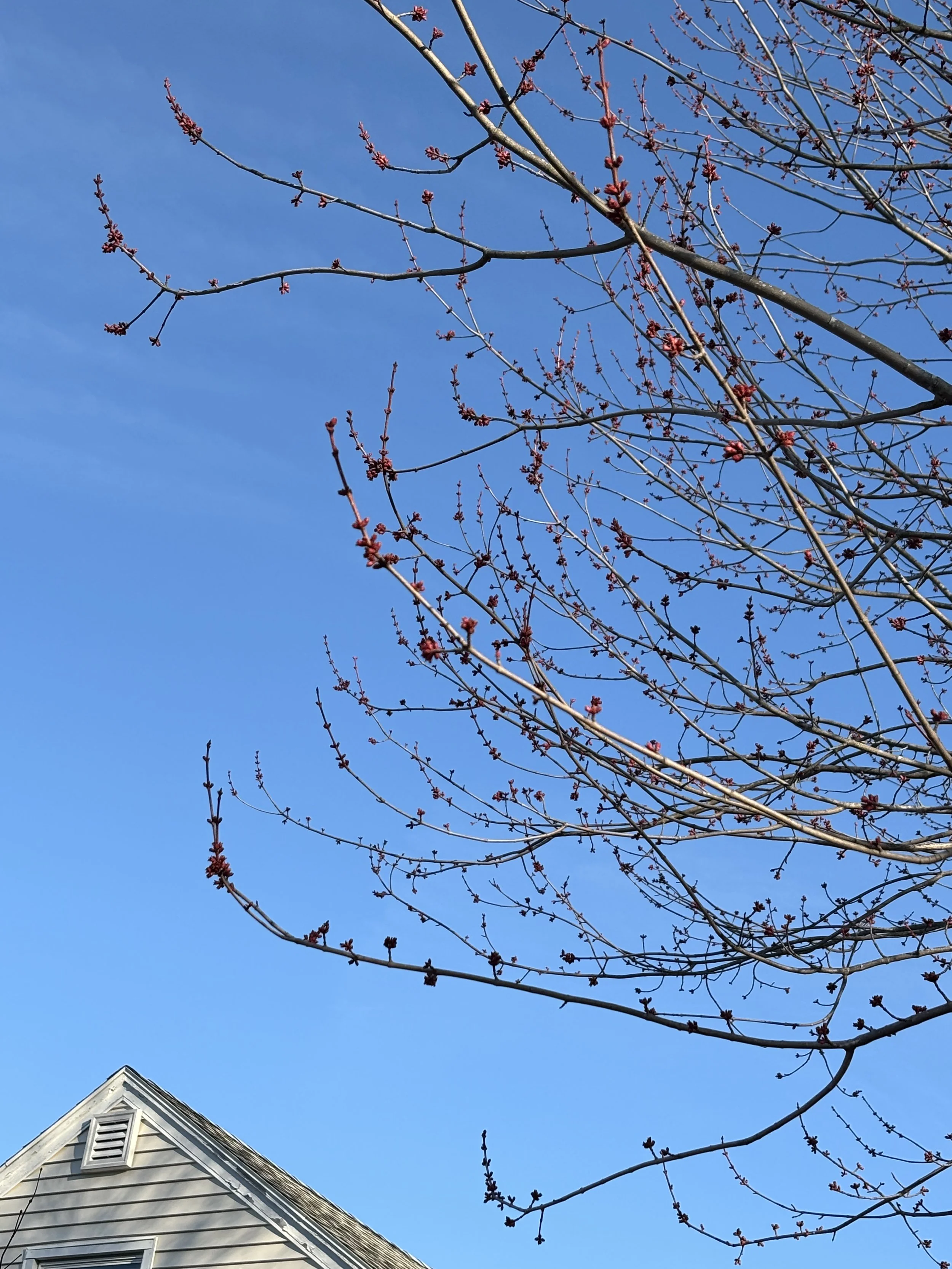
Oh, and hey, it's springtime, and everything outside is dramatically unfurling. Buds insisting on themselves. Green grass coming back from earth that looked so dead. It's easy, looking at all that propulsion, to feel like that’s what growth looks like—and that anything slower, quieter, more contracted is falling behind.
But contraction is just as essential as expansion. The bud holds before it opens. The bulb does everything underground, in the dark, before there's anything to see. Healing isn't a continuous unfurling. It rests. It integrates. It goes quiet for stretches that can feel, from the inside, like stagnation.
If you've been consuming way too many Instagram reels lately, or finding it hard to do the things you know help, or just feeling like you should be further along than you are—put the phone down, go outside, and consider the bulb. Doing its invisible work. Not failing to bloom. Just not ready yet.
As for the bathroom: I'm not going to perfectly repair every uneven patch. I don't have the skill, and honestly I don't have the desire to acquire it right now. Soooo, I'm putting up some new beadboard, just halfway up the wall this time. And from there, some wallpaper I actually like. Modern, a little weird, my choice.
I'm not going for perfect. For me it's about finding my way through. Picking up a couple of new skills. A fresh look, a functional loo, and a good story.
♥ Emily